

Preface
本次介紹的 Raft 算是筆者閱讀 《 In Search of an Understandable Consensus Algorithm 》 論文的筆記。如果夥伴希望深入了解 Raft 概念的話,論文絕對是最詳細的好夥伴。
Snapshot
Log 會隨著 client request 不斷增長,因而造成大量儲存空間與系統恢復耗時增加。
所以 Raft 使用 Snapshot 方式,將整個目前系統狀態寫入 snapshot,並丟棄已經 commit 的 log entries。
InstallSnapshot
某些情況下 (e.g., follower 長時間 offline),leader 已經刪除 log entries,但 follower 還沒收到,導致 leader 無法用 AppendEntries 補齊。這時 leader 會調用 InstallSnapshot RPC 將最新的 snapshot 傳給落後的 follower。
NOTE
InstallSnapshot參數 :Arguments
term: leader’s termleaderId: follower can redirect clientlastIncludedIndex: the snapshot replaces all entries up through and including this indexlastIncludedTerm: term of lastIncludedIndexoffset: byte offset where chunk is positioned in the snapshot filedata[]: raw bytes of the snapshot chunk, starting at offsetdone: true if this is the last chunkResults
term: currentTerm, for leader to update itself
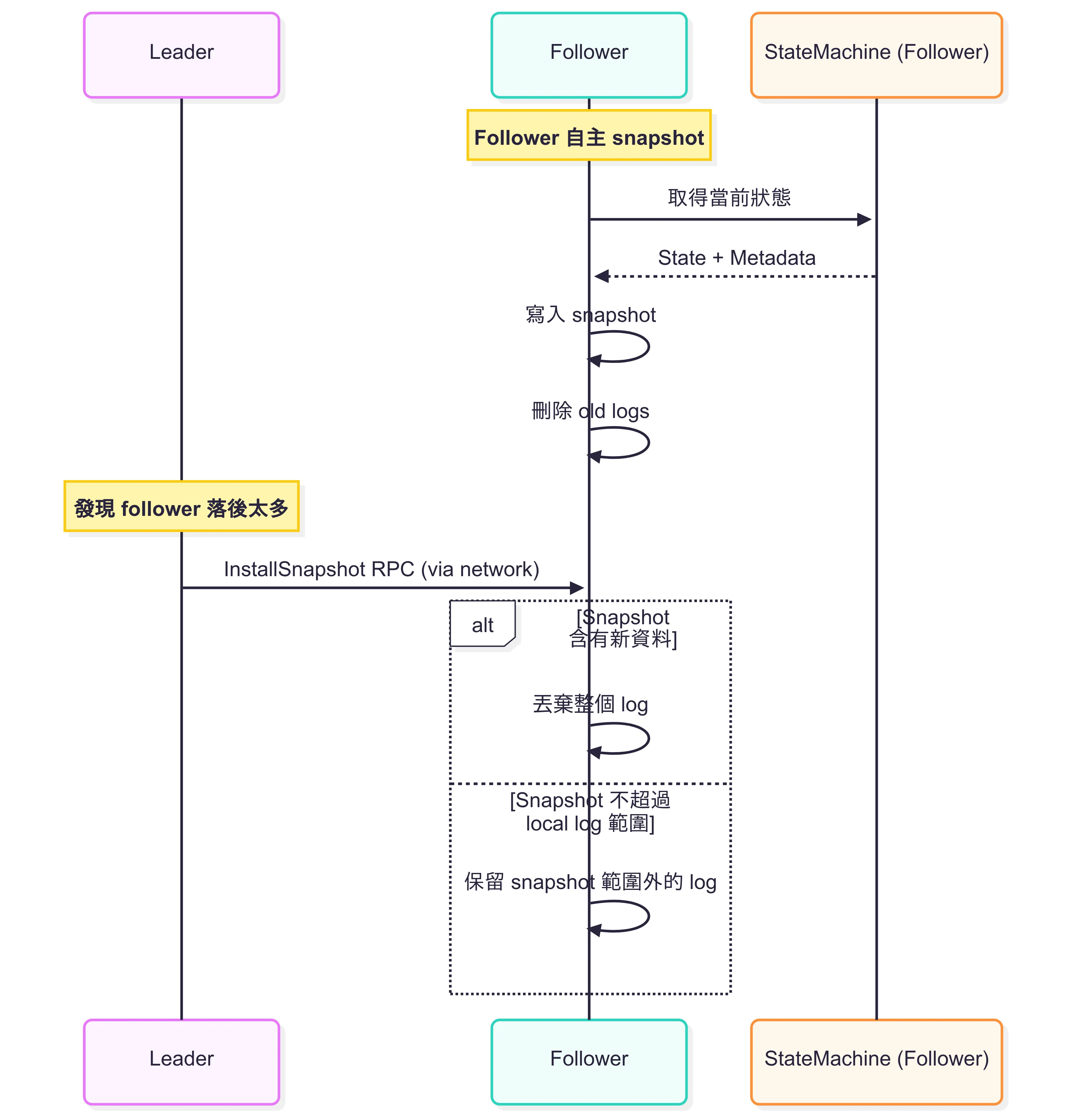
而 follower 收到 snapshot 後,有兩種情況 :
Snapshot 含有新資訊 (超過 local log)
丟掉原本的 log (避免 uncommitted conflict),根據
lastIncludedIndex和lastIncludedTerm套用 snapshot。Snapshot 的資料涵蓋在 local log 中
刪除被 snapshot 範圍覆蓋的 log,後面的 entries 繼續保留。
Follower Local Snapshot
Snapshot 其實屬於本地的狀態管理,不涉及共識,因此 Raft 允許 follower 自身進行 snapshot。 (只有當 follower 落後 leader 太多,leader 才會調用 InstallSnapshot 進行同步,資料仍然由 leader 傳出)
前面提到的流程如下 :
Get notified via email whenever a new article is published. No spam, unsubscribe anytime.